








Choosing Wisely

The Choosing Wisely Strategic Advisory Group is an initiative ignited by the broader campaign led by the ABIM Foundation. The overarching aim is been to ignite conversations between clinicians and patients regarding the necessity of tests, treatments, and procedures. Originating in 2012 with nine national specialty societies representing 375,000 clinicians, the campaign initially presented 45 examples of commonly utilized tests or treatments lacking strong supporting evidence.


Over the years, this initiative has evolved, with more than 80 specialty societies contributing additional examples until 2023. Societies, like EAP, have been encouraged to publish individual lists.


The CW SAG of EAP was established in 2018 and is consisting of active 32 members from 19 European countries.

For Physicians

For Parents

ENGLISH

CZECH

FINNISH

FLEMISH / DUTCH

FRENCH

GERMAN

ITALIAN

NORWEGIAN

PORTUGUESE

SLOVENIAN

SPANISH

For Physicians

Top 10 Recommendations

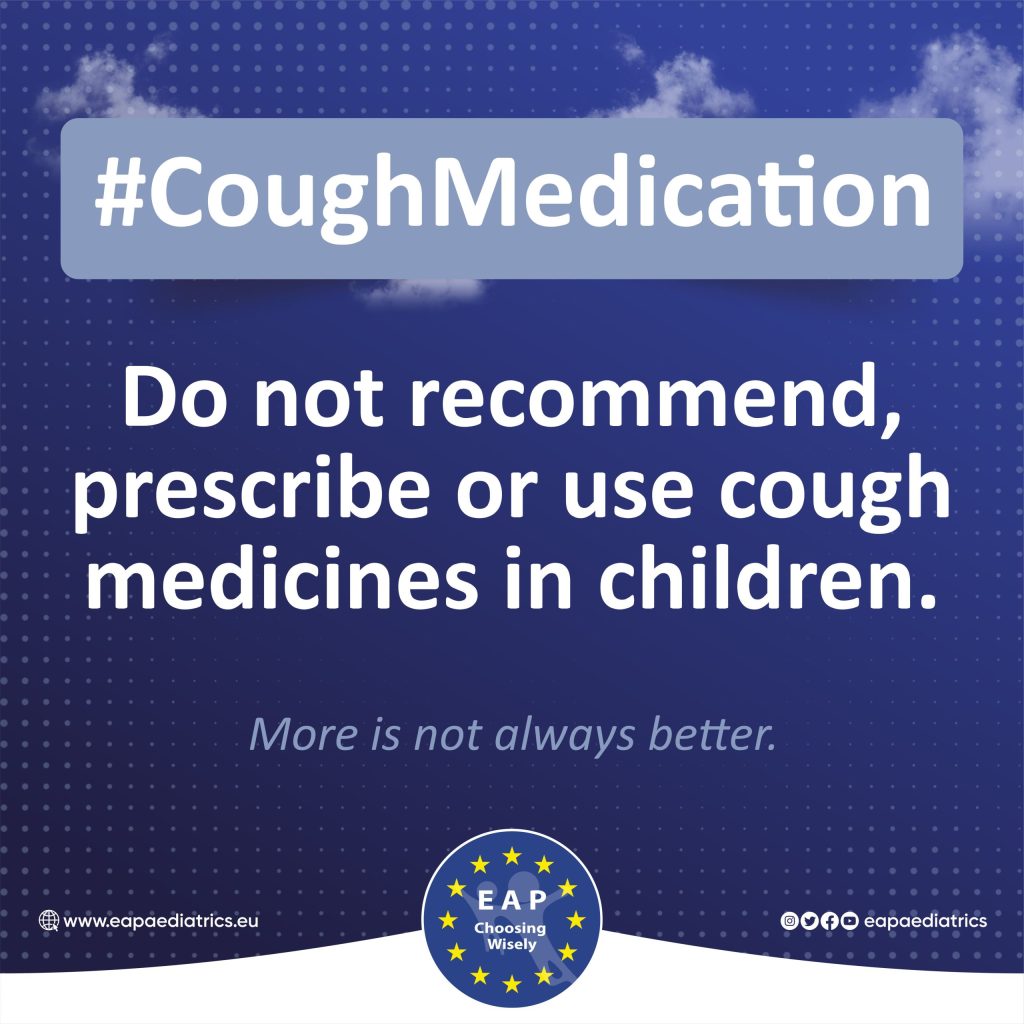
Do not recommend, prescribe or use cough medicines in children.

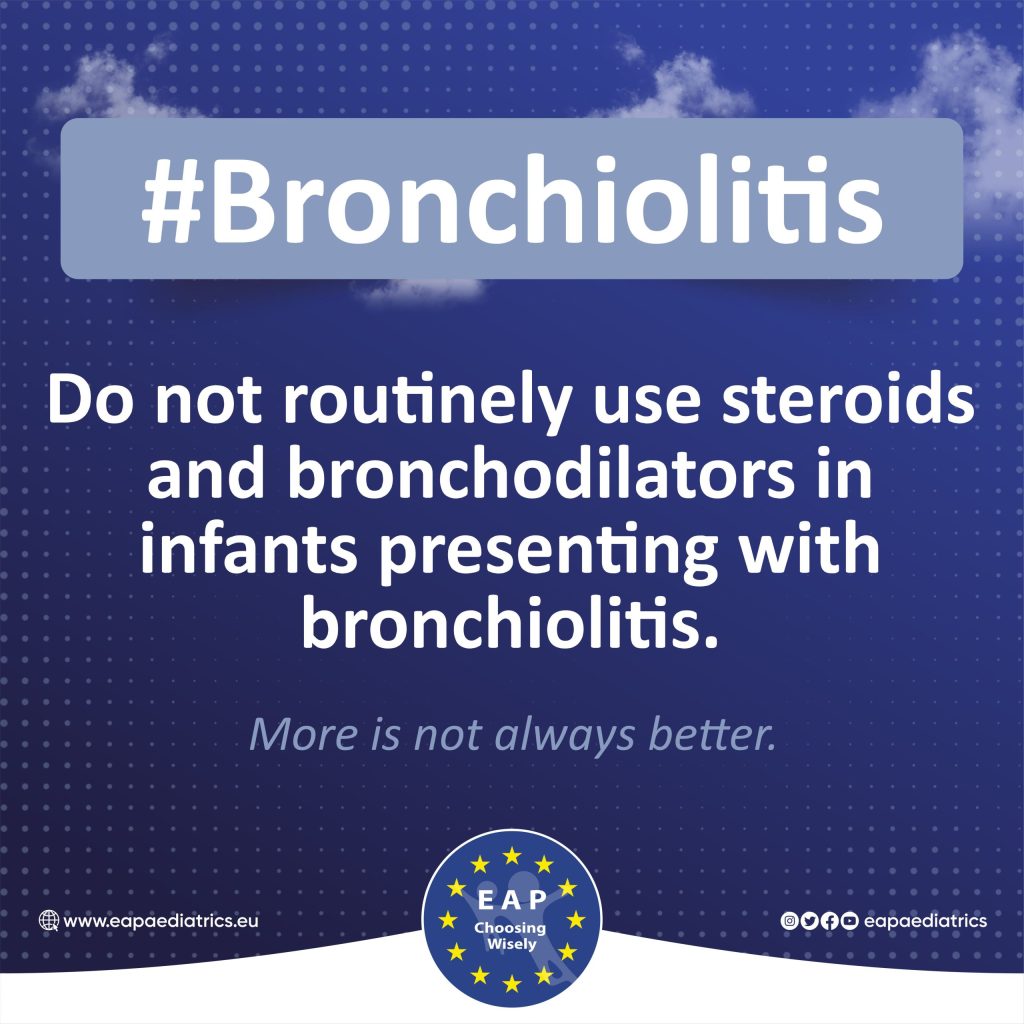
Do not routinely use steroids and bronchodilators in infants presenting with bronchiolitis.

Duration: Do not routinely prolong IV antibiotics to treat severe infections, but consider switching to the oral form as soon as the clinical condition has improved.

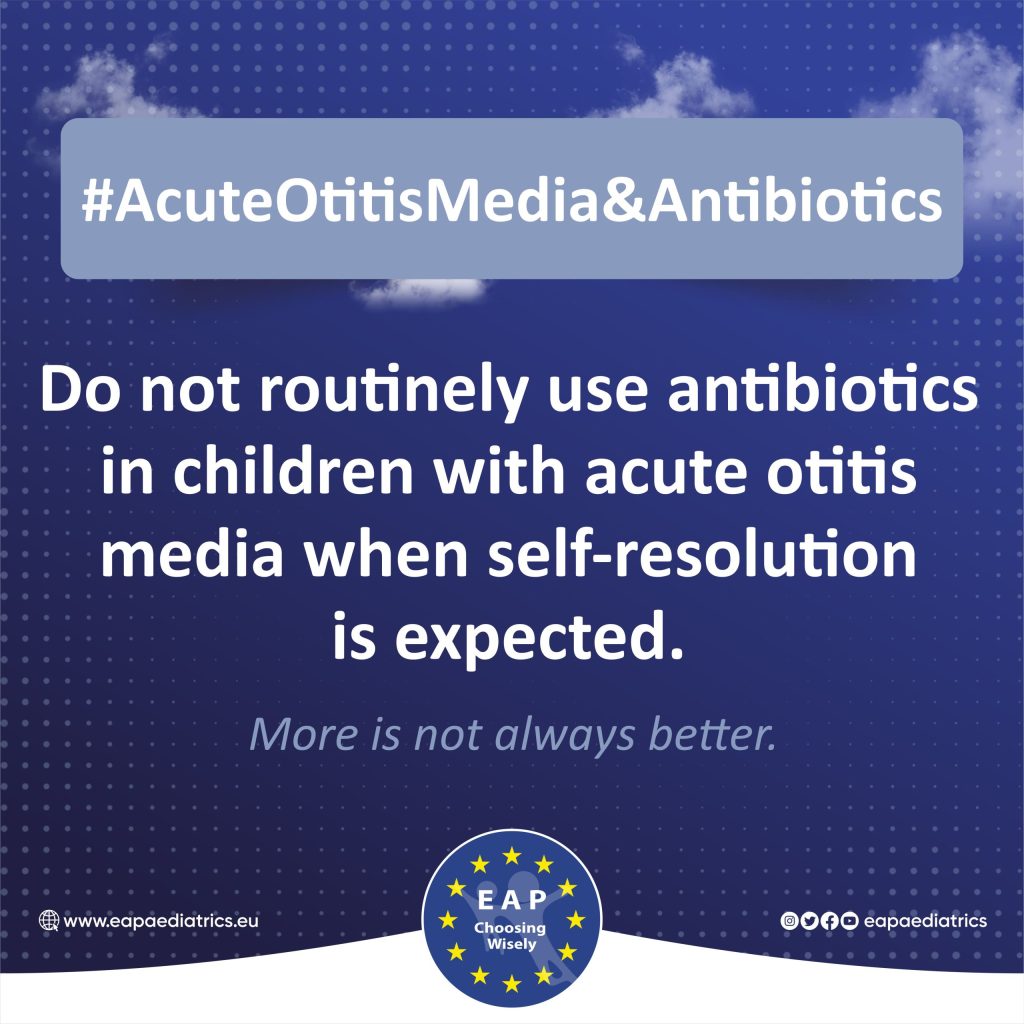
Do not routinely use antibiotics in children with acute otitis media when self-resolution is expected.

Do not prescribe antibiotics for neonates without clinical signs of sepsis.

Do not routinely continue hospitalization in well-appearing febrile infants once bacterial cultures have been confirmed negative for 24 to 36 hours if adequate outpatient follow-up can be assured.

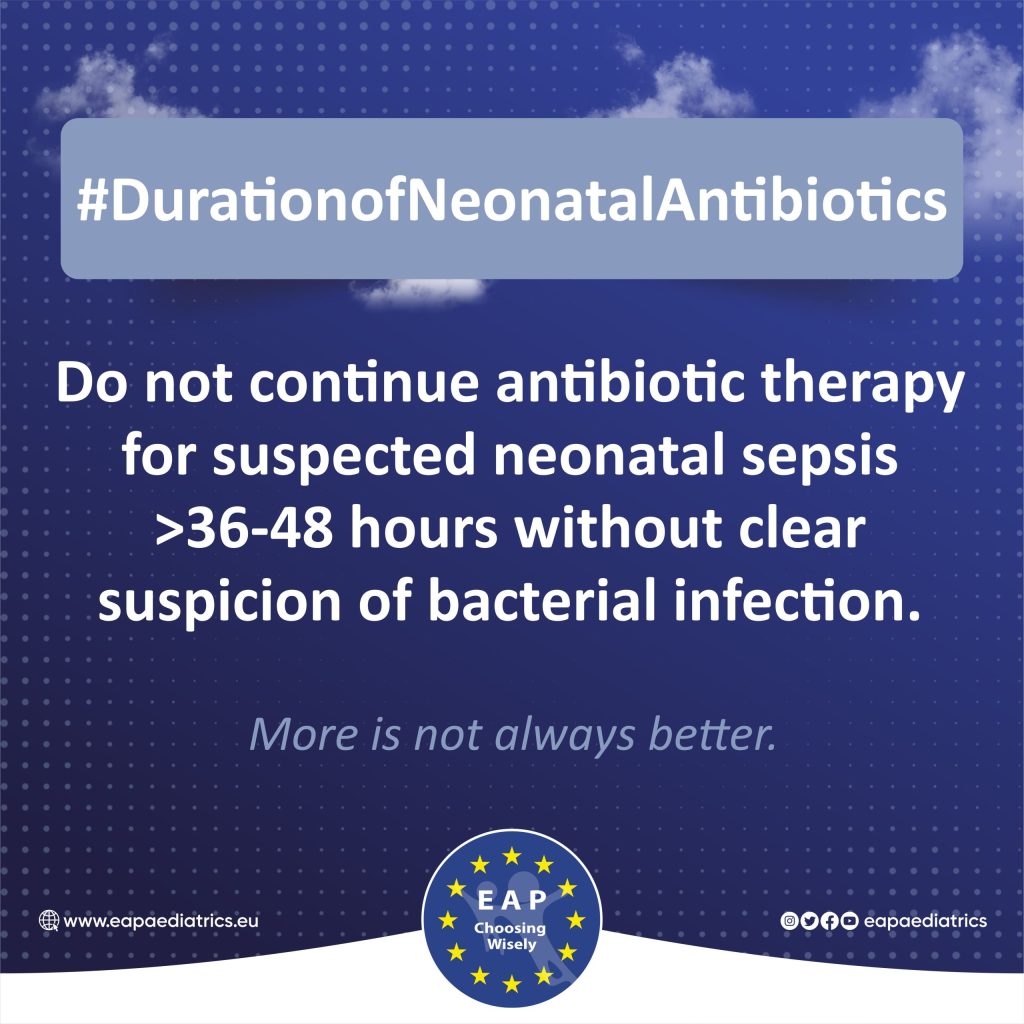
Do not continue antibiotic therapy for suspected neonatal sepsis >36-48 hours without clear suspicion of bacterial infection.

Do not perform screening panels (IgE tests) for food allergies without a history consistent with a specific food allergy.

Do not request urine culture in febrile children older than 2 months with respiratory tract infection.

 Do not routinely prescribe acid blockers and motility agents in infants with GER.

Cough Medication

Bronchitis

IV Antibiotic Duration

Acute Otitis Media

Antibiotics in neonates

Hospitalization of febrile infants

Duration of neonatal antibiotics

IgE Testing

Urine Culture

Gastroesophageal reflux

Porto EAP Spring Meeting 2024 Choosing Wisely Retractable Banner

For Parents

Top 10 Recommendations

Do not recommend, prescribe or use cough medicines in children.

Do not routinely use steroids and bronchodilators in infants presenting with bronchiolitis.

Duration: Do not routinely prolong IV antibiotics to treat severe infections, but consider switching to the oral form as soon as the clinical condition has improved.

Do not routinely use antibiotics in children with acute otitis media when self-resolution is expected.

Do not prescribe antibiotics for neonates without clinical signs of sepsis.

Do not routinely continue hospitalization in well-appearing febrile infants once bacterial cultures have been confirmed negative for 24 to 36 hours if adequate outpatient follow-up can be assured.

Do not continue antibiotic therapy for suspected neonatal sepsis >36-48 hours without clear suspicion of bacterial infection.

Do not perform screening panels (IgE tests) for food allergies without a history consistent with a specific food allergy.

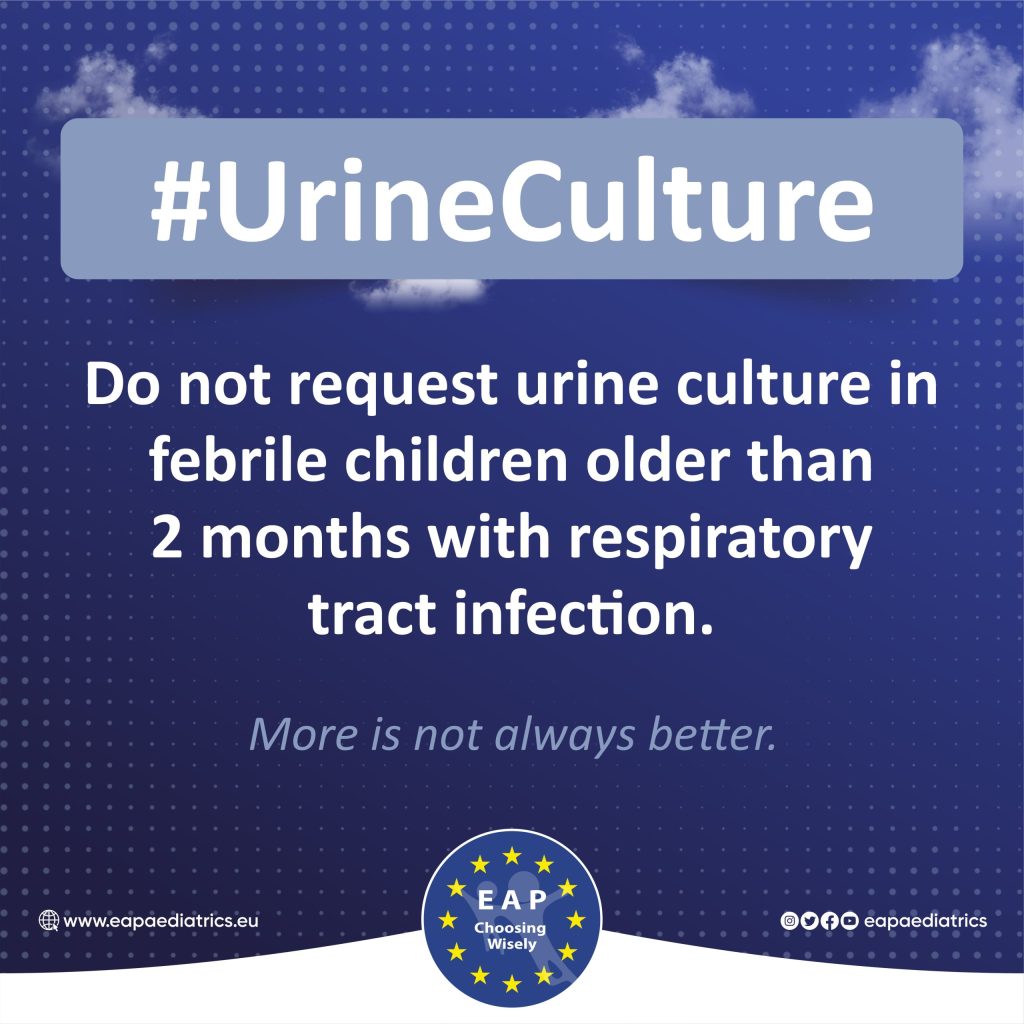
Do not request urine culture in febrile children older than 2 months with respiratory tract infection.

 Do not routinely prescribe acid blockers and motility agents in infants with GER.
Booklet

Countries Involved

Created with Raphaël 2.1.0

Contact

Chair: Corinne Wyder

Your Enquiries Are Welcome

We will respond to you by Email

""
 

The likelihood of simultaneous respiratory and urinary tract infections in healthy pediatric patients beyond the neonatal period is notably low.

What is known about urine tests:

How to talk with patients and parents about urine tests:

This EAP recommendation is in accordance with Choosing Wisely recommendations of:

There are no Choosing Wisely recommendations about this topic. Two national guidelines outside of the CW-group endorse this recommendation:
References:

  • Almojali AI, Alshareef MS, Aljadoa OF, Alotaibi FF, Masuadi EM, Hameed TK. The prevalence of serious bacterial infections in infants 90 days and younger with viral respiratory tract infections. Saudi Med J. 2022 Sep;43(9):1007-1012. PMID: 36104056

  • Dahiya A, Goldman RD. Management of asymptomatic bacteriuria in children. Can Fam Physician. 2018 Nov;64(11):821-824. PMID: 30429177

  • Nicolle LE, Gupta K, Bradley SF, Colgan R, DeMuri GP, Drekonja D, Eckert LO, Geerlings SE, Köves B, Hooton TM, Juthani- Mehta M, Knight SL, Saint S, Schaeffer AJ, Trautner B, Wullt B, Siemieniuk R. Clinical Practice Guideline for the Management of Asymptomatic Bacteriuria: 2019 Update by the Infectious Diseases Society of America. Clin Infect Dis. 2019 May 2;68(10):e83-e110. PMID: 30895288

  • Patel N, Al-Sayyed B, Gladfelter T, Tripathi S. Epidemiology and Outcomes of Bacterial Coinfection in Hospitalized Children With Respiratory Viral Infections: A Single Center Retrospective Chart Review. J Pediatr Pharmacol Ther. 2022;27(6):529-536. PMID: 36042958

  • Purcell K, Fergie J. Concurrent serious bacterial infections in 2396 infants and children hospitalized with respiratory syncytial virus lower respiratory tract infections. Arch Pediatr Adolesc Med. 2002 Apr;156(4):322-4. PMID: 11929363

Physiological gastroesophageal reflux (GER) is very common in infants, as 70-85% of infants have daily regurgitations within the first two months of life. In 95% of infants, regurgitation resolves without intervention before they reach one year of age

What is known about acid blockers and motility agents:

What is known about prescribing antibiotics:

Proton pump inhibitors (PPI):

Motility agents:

How to talk with patients and parents about acid blockers and motility agents/GER:

This EAP recommendation is in accordance with the Choosing Wisely recommendations of:

American Family Physicians Choosing Wisely:
https://www.aafp.org/pubs/afp/collections/choosing-wisely/19.html

References:

  • Gieruszczak-Białek D, Konarska Z, Skórka A, Vandenplas Y, Szajewska H. No effect of proton pump inhibitors on crying and irritability in infants: systematic review of randomized controlled trials. J Pediatr. 2015 Mar;166(3):767-770.e3. PMID: 25556017

  • Lassalle M, Zureik M, Dray-Spira R. Proton Pump Inhibitor Use and Risk of Serious Infections in Young Children. JAMA Pediatr. 2023 Oct 1;177(10):1028. PMID: 37578761

  • Rosen R, Vandenplas Y, Singendonk M, Cabana M, DiLorenzo C, Gottrand F, et al. Pediatric Gastroesophageal Reflux Clinical Practice Guidelines: Joint Recommendations of the North American Society for Pediatric Gastroenterology, Hepatology, and Nutrition and the European Society for Pediatric Gastroenterology, Hepatology, and Nutrition. J pediatr gastroenterol nutr. 2018 Mar;66(3):516–54. PMID: 29470322

  • NICE guidelines. Gastro-oesophageal reflux disease in children and young people: diagnosis and management [Internet]. London: National Institute for Health and Care Excellence (NICE); 2019 [cited 2024 Mar 11]. PMID: 31944641

  • Turk H, Hauser B, Brecelj J, Vandenplas Y, Orel R. Effect of proton pump inhibition on acid, weakly acid and weakly alkaline gastro-esophageal reflux in children. World J Pediatr. 2013 Feb;9(1):36–41. PMID: 23389331

Specific IgE levels can be raised without being clinically relevant or even be false-positive.

What is known about IgE tests:

How to talk with patients and parents about IgE tests:

This EAP recommendation is in accordance with Choosing Wisely recommendations of:

References:

The gold standard for diagnosing neonatal sepsis is blood culture.

What is known about neonatal antibiotics:

What is known about prescribing antibiotics:

Avoiding unnecessary antibiotics is safe and has advantages for your baby:

Unless we are certain there is a bacterial infection, the risks of using an IV access outweigh the potential benefit. Risks include skin damage due to catheter-related complications or bacterial resistance.
This EAP recommendation is in accordance with Choosing Wisely recommendations of:

References:

  • Esaiassen E, et al. Antibiotic exposure in neonates and early adverse outcomes: a systematic review and meta- analysis. J Antimicrob Chemother. 2017 Jul 1;72(7):1858-1870. PMID: 28369594

  • Giannoni E, Dimopoulou V, Klingenberg C, Navér L, Nordberg V, Berardi A, et al. Analysis of Antibiotic Exposure and Early-Onset Neonatal Sepsis in Europe, North America, and Australia. JAMA Netw Open. 2022 Nov 23;5(11):e2243691. PMID: 36416819

  • Stocker M, Klingenberg C, Navér L, Nordberg V, Berardi A, El Helou S, et al. Less is more: Antibiotics at the beginning of life. Nat Commun. 2023 Apr 27;14(1):2423. PMID: 37105958

  • Ur Rehman Durrani N, Rochow N, Alghamdi J, Pelc A, Fusch C, Dutta S. Minimum Duration of Antibiotic Treatment Based on Blood Culture in Rule Out Neonatal Sepsis. Pediatr Infect Dis J. 2019 May;38(5): 528–32. PMID: 30169482

Do not routinely continue hospitalization in well-appearing febrile infants once bacterial cultures have been confirmed negative for 24 to 36 hours if adequate outpatient follow-up can be assured
Culture clear – Outpatient near!

What is known about bacterial blood culture results after 24-36 hours:

How to talk with patients and parents about cough medicine:

This EAP recommendation is in accordance with Choosing Wisely recommendations of:

ABIM Foundation, Society of Hospital Medicine, American Academy of Pediatrics, and the American Pediatric Association:
https://downloads.aap.org/AAP/PDF/Choosing%20Wisely/CWHospitalmedicine.pdf
References:

  • Biondi EA, Mischler M, Jerardi KE, Statile AM, French J, Evans R, et al. Blood culture time to positivity in febrile infants with bacteremia. JAMA Pediatr. 2014 Sep;168(9):844–9. PMID: 25048522

  • Dierig A, Berger C, Agyeman PKA, Bernhard-Stirnemann S, Giannoni E, Stocker M, et al. Time-to-Positivity of Blood Cultures in Children With Sepsis. Front Pediatr. 2018;6:222. PMID: 30135859

  • Fielding-Singh V, Hong DK, Harris SJ, Hamilton JR, Schroeder AR. Ruling out bacteremia and bacterial meningitis in infants less than one month of age: is 48 hours of hospitalization necessary? Hosp Pediatr. 2013 Oct;3(4):355–61. PMID: 24435193

  • Lefebvre CE, Renaud C, Chartrand C. Time to Positivity of Blood Cultures in Infants 0 to 90 Days Old Presenting to the Emergency Department: Is 36 Hours Enough? J Pediatric Infect Dis Soc. 2017 Mar 1;6(1):28–32. PMID: 26621327

In asymptomatic term and late-preterm infants with risk factors, close clinical monitoring is the safer option, allowing for adequate and timely sepsis detection while reducing unnecessary antibiotic-related harm.

What is known about antibiotics in neonates:

Neonatal early-onset sepsis is a rare but life-threatening condition and is therefore at risk of being overdiagnosed and overtreated. Antibiotics are the most commonly prescribed medication in neonatal units.

Early-life antibiotic exposure disrupts the developing microbiome, which may contribute to numerous diseases later in life, including diabetes, obesity, inflammatory bowel disease, asthma, and allergy and is also associated with mother-newborn separation, longer duration of hospital stay, and reduced breastfeeding rates.

Unnecessary antibiotic use has also been associated with adverse patient outcomes and emergence of multi- resistant organisms.

How to talk with patients and parents about cough medicine:

Avoiding unnecessary antibiotics is safe and has many advantages for your baby such as:

Close monitoring ensures that signs of severe infection are not missed.

This EAP recommendation is in accordance with Choosing Wisely recommendations of:

USA:
https://www.aafp.org/pubs/afp/collections/choosing-wisely/465.html
References:

  • Berardi A, Buffagni AM, Rossi C, et al. Serial physical examinations, a simple and reliable tool for managing neonates at risk for early-onset sepsis. World J Clin Pediatr. 2016 Nov 8;5(4):358–64. PMID: 27872823

  • Giannoni E, Dimopoulou V, Klingenberg C, Navér L, Nordberg V, Berardi A, El Helou S, Fusch G, Bliss JM, Lehnick D, Guerina N. Analysis of Antibiotic Exposure and Early-Onset Neonatal Sepsis in Europe, North America, and Australia. JAMA Network Open. 2022 Nov 1;5(11):e2243691. PMID: 36416819

  • Hooven TA, Randis TM, Polin RA. What’s the harm? Risks and benefits of evolving rule-out sepsis practices. J Perinatol. 2018 Jun;38(6):614–22. PMID: 29483569

  • Prusakov P, Goff DA, Wozniak PS, Cassim A, Scipion CE, Urzua S, Ronchi A, Zeng L, Ladipo-Ajayi O, Aviles-Otero N, Udeigwe-Okeke CR. A global point prevalence survey of antimicrobial use in neonatal intensive care units: the no- more-antibiotics and resistance (NO-MAS-R) study. EClinicalMedicine. 2021 Feb 1;32.100727. PMID: 33554094

  • Van Herk W, Stocker M, van Rossum AM. Recognising early onset neonatal sepsis: an essential step in appropriate antimicrobial use. Journal of Infection. 2016 Jul 5;72:S77-82. PMID: 27222092

Most patients with severe infections (i.e., pyelonephritis, osteomyelitis, and uncomplicated severe pneumonia) can be safely transitioned from intravenous (IV) to oral antibiotics:

What is known about IV antibiotics duration and oral switch timing:

How to talk with patients and parents about IV antibiotics duration and oral switch timing:

This EAP recommendation is in accordance with Choosing Wisely recommendations of:

References:

  • Ammenti A, et al. Febrile urinary tract infections in young children: recommendations for the diagnosis, treatment, and follow-up. Acta Paediatr. 2012 May;101(5):451-7. PMID: 22122295


  • Hannon M, Lyons T. Pediatric musculoskeletal infections. Curr Opin Pediatr. 2023 Jun 1;35(3):309-315. PMID: 36802036

  • McMullan BJ, Andresen D, Blyth CC, Avent ML, Bowen AC, Britton PN, Clark JE, Cooper CM, Curtis N, Goeman E, Hazelton B, Haeusler GM, Khatami A, Newcombe JP, Osowicki J, Palasanthiran P, Starr M, Lai T, Nourse C, Francis JR, Isaacs D, Bryant PA; ANZPID-ASAP group. Antibiotic duration and timing of the switch from intravenous to oral route for bacterial infections in children: systematic review and guidelines. Lancet Infect Dis. 2016 Aug;16(8):e139-52. PMID: 27321363
  • Revised WHO Classification and Treatment of Pneumonia in Children at Health Facilities: Evidence Summaries. Geneva: World Health Organization; 2014. PMID: 25535631


The use of bronchodilators and glucocorticoids did not prove to have any benefits with respect to rates of hospitalization and readmission, duration of the disease and overall disease outcome.

What is known about acute bronchiolitis:

How to talk with patients and parents about acute bronchiolitis:

Inform parents that it is a common disease and usually self-limiting respiratory infection in children. RSV goes away on its own, but it may take a week or two to get completely well.

You can give the following advice:

This EAP recommendation is in accordance with Choosing Wisely recommendations of:

American Academy of Family Physicians (AFP): 
https://www.aafp.org/pubs/afp/collections/choosing-wisely/70.html
References:

  • Cahill AA, Cohen J. Improving Evidence Based Bronchiolitis Care. Clin Pediatr Emerg Med. 2018 Mar;19(1):33-39. PMID: 32288646

  • Cai Z, Lin Y, Liang J. Efficacy of salbutamol in the treatment of infants with bronchiolitis: A meta-analysis of 13 studies. Medicine (Baltimore). 2020 Jan;99(4):e18657. PMID: 31977855

  • Dalziel SR, Haskell L, O’Brien S, Borland ML, Plint AC, Babl FE, Oakley E. Bronchiolitis. Lancet. 2022 Jul 30;400(10349):392-406. PMID: 35785792

  • Ralston SL, Lieberthal AS, Meissner HC, Alverson BK, Baley JE, Gadomski AM, et al. Clinical Practice Guideline: The Diagnosis, Management, and Prevention of Bronchiolitis. Pediatrics. 2014 Nov 1;134(5): e1474–502. PMID: 26430140

  • Zhang XL et al. Expert consensus on the diagnosis, treatment, and prevention of respiratory syncytial virus infections in children. World J Pediatr. 2024 Jan;20(1):11-25. PMID: 38064012

Share This on Social Media!

How to talk with patients and parents about cough medicine:

You can give the following advice:

This EAP recommendation is in accordance with Choosing Wisely recommendations of:

References:

  • Korppi M. Cough and cold medicines should not be recommended for children. Acta Paediatr. 2021 Aug;110(8):2301-2302. PMID: 33811382

  • Palmu S, Heikkilä P, Kivistö JE, Poutanen R, Korppi M, Renko M, Csonka P. Cough medicine prescriptions for children were significantly reduced by a systematic intervention that reinforced national recommendations. Acta Paediatr. 2022 Jun;111(6):1248-1249. PMID: 35143072

  • Smith SM, Schroeder K, Fahey T. Over-the-counter (OTC) medications for acute cough in children and adults in community settings. Cochrane Database Syst Rev. 2014 Nov 24;2014(11):CD001831. PMID: 25420096

Acute otitis media (AOM) is a very common and usually self-limiting infection in children. Watchful waiting strategy should be discussed with parents and follow-up after 48-72 hours is arranged, if symptoms persist.

What is known about prescribing antibiotics:

What is known about prescribing antibiotics:

What is known about prescribing antibiotics:

References:

  • Del Castillo-Aguas G, et al. Acute otitis media management: A survey of European primary care pediatricians. Global Pediatrics 2023; 4 100057. https://doi.org/10.1016/j.gpeds.2023.100057

  • Le Saux N, et al. Canadian Paediatric Society, Infectious Diseases and Immunization Committee. Management of acute otitis media in children six months of age and older. Paediatr Child Health. 2016; 21(1):39-50. PMID: 26941560

  • Lieberthal AS, et al. The diagnosis and management of acute otitis media. Pediatrics. 2013; 131(3):e964-999. PMID: 23439909 Marchisio P, et al. Italian panel for the management of acute otitis media in children. Updated guidelines for the management of acute otitis media in children by the

  • NICE guidelines 2022. Otitis media (acute): antimicrobial prescribing. https://www.nice.org.uk/guidance/ng91

  • Suzuki HG, et al. Clinical practice guidelines for acute otitis media in children: a systematic review and appraisal of European national guidelines. BMJ Open. 2020; 10(5):e035343. PMID: 32371515

  • Thomas JP, et al. Acute otitis media–a structured approach. Dtsch Arztebl Int. 2014; 28;111(9):151-9; PMID: 24661591

  • Venekamp RP, et al. Antibiotics for acute otitis media in children. Cochrane Database of Systematic Reviews 2023, Issue 11. Art. No.: CD000219. PMID: 37965923

Core-MD Project

Coordinating Research and Evidence for Medical Devices (CORE-MD)

New ways to test high-risk medical devices.


Manufacturers of medical devices need to test their products before being allowed to market them. Specifically, they require clinical data showing their medical device is safe and efficient. In this context, the EU-funded CORE-MD project will translate expert scientific and clinical evidence on study designs for evaluating high-risk medical devices into advice for EU regulators. The project will propose how new trial designs can contribute and suggest ways to aggregate real-world data from medical device registries.


It will also conduct multidisciplinary workshops to propose a hierarchy of levels of evidence from clinical investigations, as well as educational and training objectives for all stakeholders, to build expertise in regulatory science in Europe. CORE–MD will translate expert scientific and clinical evidence on study designs for evaluating high-risk medical devices into advice for EU regulators, to achieve an appropriate balance between innovation, safety, and effectiveness. A unique collaboration between medical associations, regulatory agencies, notified bodies, academic institutions, patients’ groups, and health technology assessment agencies, will systematically review methodologies for the clinical investigation of high-risk medical devices, recommend how new trial designs can contribute, and advise on methods for aggregating real-world data from medical device registries with experience from clinical practice The consortium is led by the European Society of Cardiology and the European Federation of National Associations of Orthopaedics and Traumatology, and involves all 33 specialist medical associations that are members of the Biomedical Alliance in Europe.


EAP Representative: