
EAP President
Munich, Germany

EBP President
De Haan, Belgium
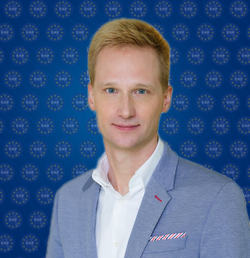
EAP/EBP Treasurer
Warsaw, Poland

Secretary General
Valletta, Malta
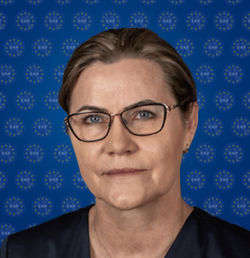
Chair Primary Care
Nyiregyhaza, Hungary
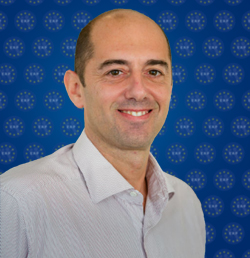
Chair Secondary-Tertiary Care
Paris, France
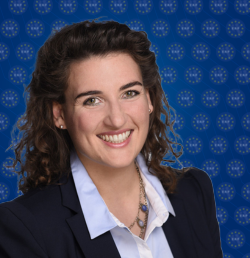
Young EAP Chair
Berlin, Germany
Quick Details
The position of Secretary General is a key leadership role within the Executive Committee. This position offers a unique opportunity for an experienced and motivated individual to contribute to the advancement of child health in Europe through strategic coordination, governance, and stakeholder engagement.
The Secretary General serves as a core member of the Executive Committee and works in close collaboration with the President, Treasurer, EAP Office, and national delegates. The role involves contributing to the strategic development of the Academy, ensuring the smooth functioning of its operations, and supporting its mission-driven initiatives.
The Secretary General works closely with a dedicated team at the EAP Office and external professional partners.
The ideal candidate will:
The Secretary General is elected for a four-year term, renewable once. Interested candidates should submit:
Applications must be submitted at least two months prior to the election, via the designated online application form.
Quick Details
Role Overview
The Secondary/Tertiary Care Council (STCC) serves the scientific, educational, professional and practice-based interests of secondary/tertiary care paediatrics, including all hospital based paediatrics. It provides representation of secondary/tertiary care to the European Board of Paediatrics, relevant task forces and strategic advisory groups (SAG).
National delegates, paediatric subspecialty societies and related societies, and individual active, affiliated and honorary members with a related interest in specific areas contribute to the activities of the Secondary/Tertiary Care Council.
The STCC Chairperson is part of the Executive Committee (EC). Together with the members of the EC and the Chairs of the SAG helps to assess project’s performance, stimulates National Delegates and Subspecialty Societies to ensure that common goals have been achieved and provides constructive feedback on common initiatives.
The STCC Chair :
– The STCC Chair advises National Societies or individual secondary/tertiary institutions on matters related to the STCC.
Quick Details
European Board of Paediatrics (EBP) Chair
Open to all European National Delegates from full member countries as per the UEMS (https://www.uems.eu/uems-members).
The European Board of Paediatrics is the educational arm of the UEMS Paediatric Section , one of the 43 UEMS specialist sections dedicated to promoting high standards of medical training, practice, and patient care in their respective medical disciplines- recognised by the European Union- across Europe .
The main aim of EBP (RoP Art. V.8) is to “guarantee the highest standard of care in the field of Paediatrics in the countries of the European Union, by ensuring that the training is raised to the highest possible level.
It derives from these provisions that EBP is the platform for co-operation between UEMS Bodies and Paediatric Scientific Societies and/or Associations to address scientific and training interests.
Having as a primary focus the development of high-quality standards of training in Paediatrics, the EBP must primarily work on European recommendations for paediatric training and the development of a set of competences and methods for the assessment of competence, both for General Paediatrics and for Paediatric Subspecialties and European Training Requirements (ETRs). Many of these have already been produced and approved by UEMS but require careful updating every three years.
Under the aegis of UEMS-SP, EBP can produce documents, reports, papers on specialty-related issues and can launch awareness-raising campaigns on issues which they find appropriate.
The EBP Chair supports the Chair of the Secondary-Tertiary Council in supporting the ETR development, evaluation and approval. The EBP Chair takes responsibility for submitting adopted ETRs to UEMS and presenting it to the UEMS meetings.
UEMS specialist examinations are a very important activity of the UEMS and European Board willing to establish such an examination has to prepare a complete proposal describing organisation of the examining body, external partners and their roles, eligibility criteria, financial arrangements, terms of reference etc.
THE EBP chair coordinates and organizes the annual European Paediatric Exam (EBP/EAP exam), in close cooperation with the Exam Director. EBP has put a lot of effort into the organisation of the examination since 2019, has a well-structured organisation, has and has the intellectual property of a question bank of almost 800 questions, which is now being updated.
UEMS (European Union of Medical Specialists) accreditation of training centers signifies that a center meets high standards for specialized medical training within Europe.
For paediatrics and paediatric subspecialities this accreditation is managed by EBP/EAP, coordinated by the EBP Chair. The process involves evaluation of documentation, site visits, and interviews to ensure the center’s training programs align with European standards. To achieve this, the level of training is compared with criteria that are adopted by Paediatrics and Paediatric Subspecialities in their ETR
Achieving UEMS accreditation can enhance a center’s reputation, attract trainees, and demonstrate a commitment to quality medical education.
The European Accreditation Council for Continuing Medical Education (EACCME®), an institution of the UEMS, provides accreditation for various CME/CPD activities, including live educational events, e-learning materials, and blended learning. These activities, when accredited, can earn European CME credits (ECMEC®) which are recognized in many European countries, as well as in the USA and Canada through mutual recognition agreements.
The EBP chair collaborates with EACME on pediatric event evaluation (about 50 per year in the last years).
European Boards are internal groups of UEMS Bodies and thus are not separate legal entities.
EBP must report to the Executive (via EAP) all documents, recommendations, guidelines that they have produced.
The EBP Chair will attend the annual meetings of the UEMS Council and take part in the meeting of the Presidents and Secretaries of Sections and Boards organised in the framework of the Council meetings.
European Boards are encouraged to liaise with other UEMS Bodies and WGs to share information and documents. The parent UEMS Body will ensure and facilitate communication. In particular, European Boards organising European Examinations are encouraged to liaise with UEMS CESMA to assure proper methodology and audit.
The EBP Chair is ex officio Vice President of the UEMS-SP and member of the Executive Committee.
The Chair organises and chairs the EBP General Assembly during the two annual meetings held with the European Academy of Paediatrics, reporting on the activities carried out and gathering input on future activities.
To be an UEMS accredited delegate to the European Board of Paediatrics, nominated by his/her UEMS MemberCountry after being proposed by a Paediatric Scientific Society or a Paediatric academic or professional association of his/her country.
He/She needs to show robust educational competences in addition to being a qualified content specialist.
We aim to improve standards in training, service and research and to represent the professional interests of paediatricians in the EU

New ways to test high-risk medical devices.
Manufacturers of medical devices need to test their products before being allowed to market them. Specifically, they require clinical data showing their medical device is safe and efficient. In this context, the EU-funded CORE-MD project will translate expert scientific and clinical evidence on study designs for evaluating high-risk medical devices into advice for EU regulators. The project will propose how new trial designs can contribute and suggest ways to aggregate real-world data from medical device registries.
It will also conduct multidisciplinary workshops to propose a hierarchy of levels of evidence from clinical investigations, as well as educational and training objectives for all stakeholders, to build expertise in regulatory science in Europe. CORE–MD will translate expert scientific and clinical evidence on study designs for evaluating high-risk medical devices into advice for EU regulators, to achieve an appropriate balance between innovation, safety, and effectiveness. A unique collaboration between medical associations, regulatory agencies, notified bodies, academic institutions, patients’ groups, and health technology assessment agencies, will systematically review methodologies for the clinical investigation of high-risk medical devices, recommend how new trial designs can contribute, and advise on methods for aggregating real-world data from medical device registries with experience from clinical practice The consortium is led by the European Society of Cardiology and the European Federation of National Associations of Orthopaedics and Traumatology, and involves all 33 specialist medical associations that are members of the Biomedical Alliance in Europe.